


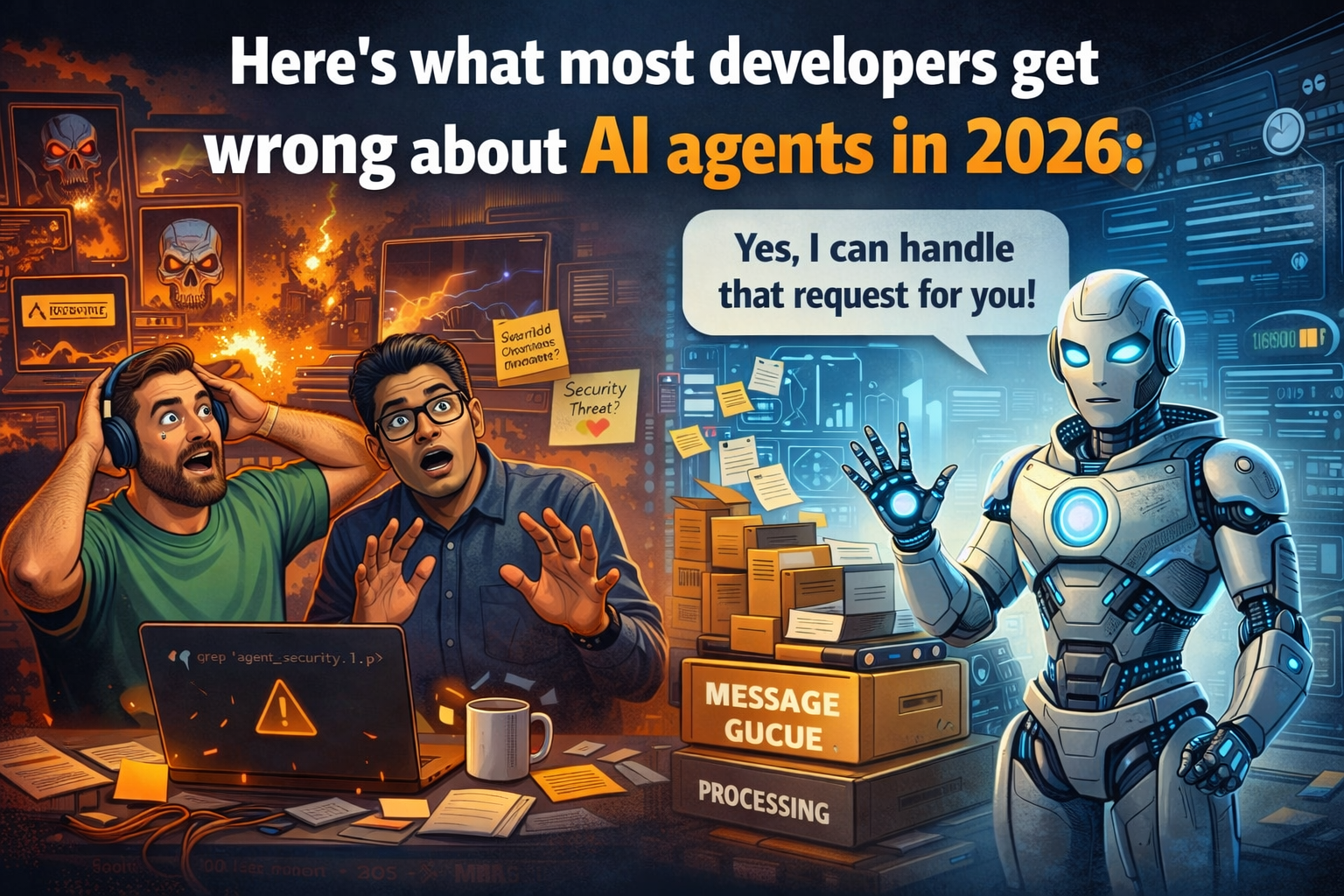
What Most Developers Get Wrong About AI Agents in 2026
AI agents are everywhere in 2026—but most developers still misunderstand how they actually work. This guide breaks down the biggest mistakes, why agents fail, and how to build reliable AI systems.
Structured like an editorial page, with a cleaner reading flow instead of repeated card blocks.
Introduction
AI agents are one of the most overhyped and misunderstood concepts in modern software development.
In 2026, every developer is trying to build:
- Autonomous workflows
- Self-operating apps
- AI-driven automation systems
But most of these systems fail.
Not because AI is weak— But because developers misunderstand what an “agent” actually is.
This blog breaks down:
- The biggest mistakes
- Why agents fail in production
- How to design them correctly
🚫 Misconception #1: AI Agents Are Autonomous
The biggest myth:
“Agents can think and act independently”
Reality:
- LLMs don’t “think”
- They predict tokens based on patterns
- They don’t understand goals like humans
When developers assume autonomy:
❌ Systems become unpredictable
❌ Decisions become unreliable
👉 Truth: AI agents are guided decision systems, not independent entities.
🚫 Misconception #2: More Tools = Better Intelligence
Developers love adding tools:
- Search APIs
- Code execution
- Database queries
- External integrations
But here’s what happens:
❌ Tool confusion
❌ Wrong tool selection
❌ Increased latency and cost
👉 Insight: Agents need constraints, not options
🚫 Misconception #3: Infinite Loops Make Agents Smarter
Typical agent logic:
while not complete:
    think()
    act()
Article gallery
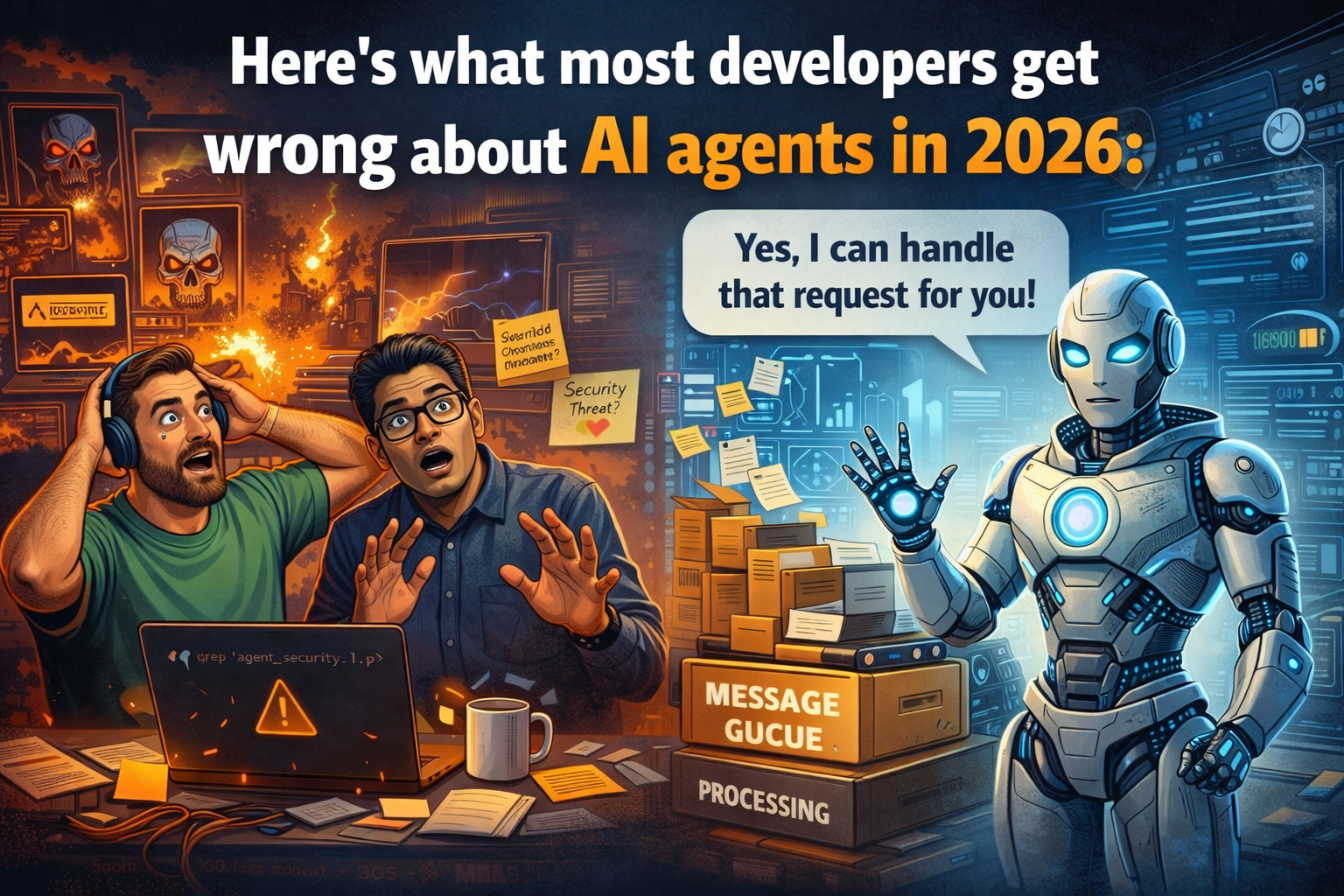
What Most Developers Get Wrong About AI Agents in 2026 visuals from the admin gallery
Need this done properly
Build, performance, SEO, and content can be handled in one delivery flow.
If you are planning a business site, technical blog, or product build that needs to look sharp and rank cleanly, the same approach can be applied to your stack.