


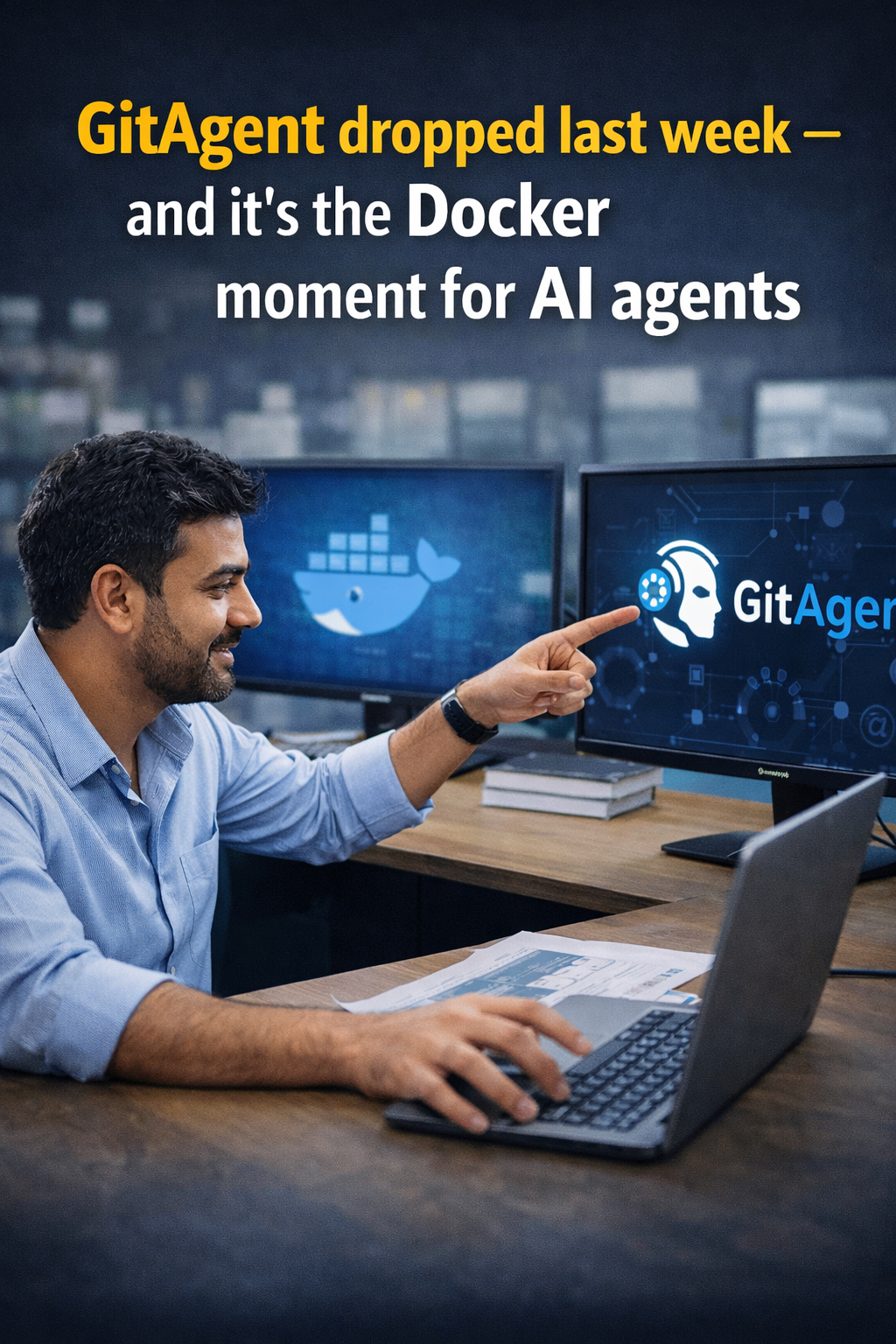
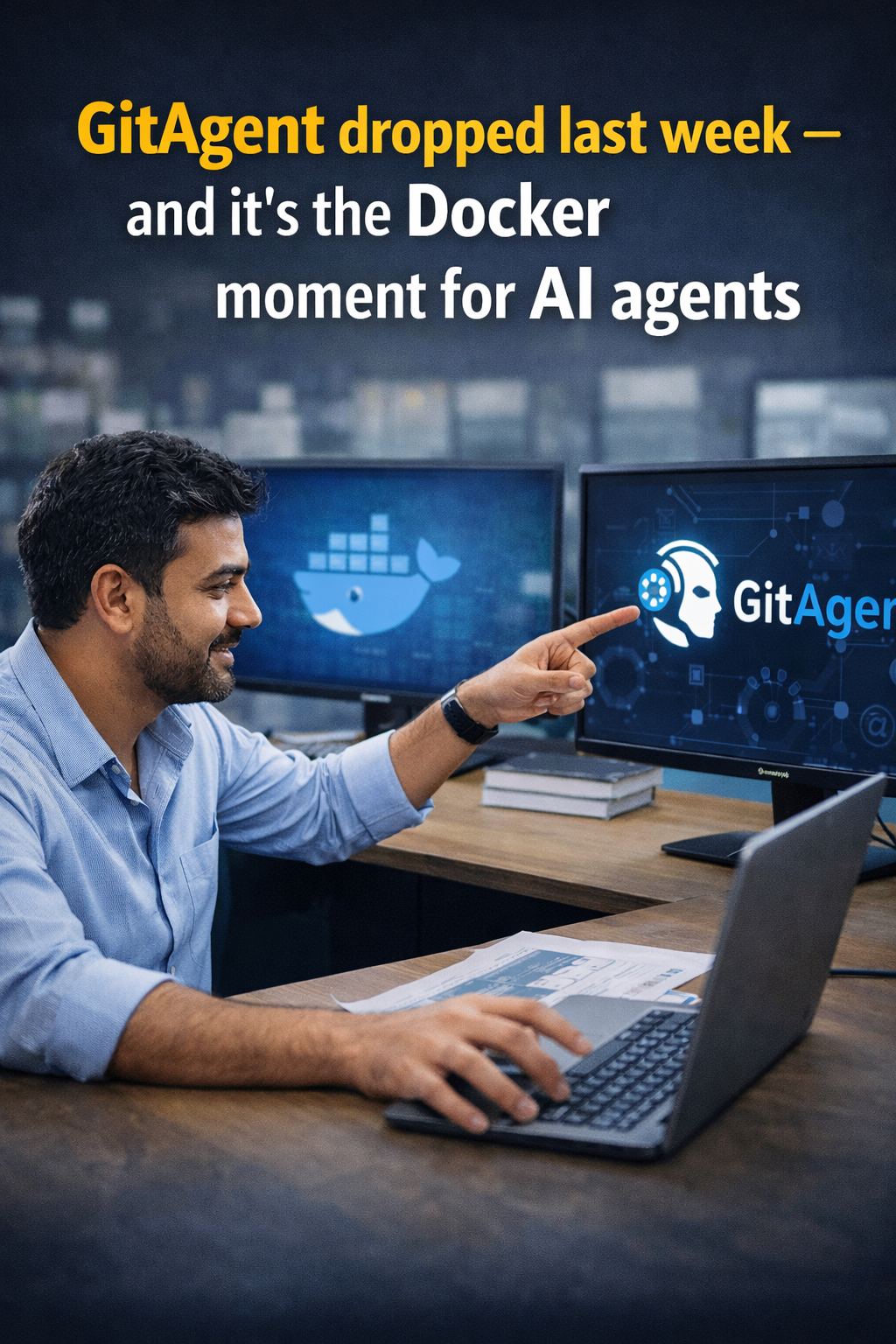
GitAgent Just Dropped — And It Might Be the Docker Moment for AI Agents
GitAgent just launched—and it could redefine how developers build, deploy, and scale AI agents, much like Docker did for containers. Here’s why it matters.
Structured like an editorial page, with a cleaner reading flow instead of repeated card blocks.
Introduction
Last week, something interesting happened.
GitAgent dropped.
At first glance, it might look like just another tool in the already crowded AI ecosystem.
But if you look closely—
This could be the “Docker moment” for AI agents.
And if that’s true, it changes everything.
🧠 The Problem with AI Agents Today
In 2026, AI agents are everywhere.
But building them is still messy:
- No standard structure
- No clear deployment model
- Hard to reproduce behavior
- Difficult to scale reliably
Every team is doing: 👉 Something different
🚫 The Current Chaos
Right now, building agents feels like early DevOps:
- Custom scripts
- Fragile pipelines
- Inconsistent environments
- No portability
Sound familiar?
👉 That’s exactly what backend looked like before Docker.
🐳 What Docker Did (Quick Reminder)
Before Docker:
- “Works on my machine” problem
- Environment inconsistencies
- Complex deployments
Docker solved:
- Standardization
- Portability
- Reproducibility
⚡ What GitAgent Is Trying to Do
GitAgent aims to do something similar for AI agents:
Standardize how agents are defined, versioned, and deployed
🔑 Key Ideas Behind GitAgent
1. Agent as Code
Instead of:
- Loose prompts
- Random scripts
You define: 👉 Agents as structured, version-controlled units
2. Reproducibility
Same agent = same behavior
- Versioned prompts
- Defined tools
- Controlled environment
3. Portability
Run your agent:
- Locally
- In cloud
- Across environments
Without rewriting logic
4. Collaboration
Teams can:
- Share agents
- Reuse workflows
- Build on top of each other
Just like Git + Docker
🔥 Why This Is a Big Deal
Because the biggest problem in AI right now is not capability—
It’s reliability and standardization
📦 The “Docker Moment” Analogy
If GitAgent succeeds:
Before:
- Agents = messy scripts
After:
- Agents = portable units
Just like:
Before Docker:
- Apps = environment chaos
After Docker:
- Apps = containers
⚙️ What This Unlocks
✅ Faster Development
- Reusable agent templates
✅ Better Debugging
- Reproducible runs
✅ Easier Scaling
- Standard deployment
✅ Team Collaboration
- Shared agent systems
🚫 What Developers Still Might Get Wrong
Even with GitAgent:
- Treating agents as magic
- Ignoring evaluation
- Overusing autonomy
👉 Tools don’t fix bad architecture
🧠 The Bigger Shift
We are moving from:
❌ Prompt engineering
To:
✅ Agent engineering
🔮 What Happens Next
If this trend continues:
- Agent registries will emerge
- Standard agent formats will evolve
- DevOps for AI will mature
🧠 Final Takeaway
GitAgent is not just another tool.
It represents a shift toward standardizing AI systems
And if it succeeds:
👉 AI agents will become portable, reproducible, and scalable
Just like containers did for applications.
🚀 What You Should Do
- Start thinking in “agent systems”
- Focus on structure, not just prompts
- Build reproducible workflows
Because:
The future of AI is not just models
It’s how we package and run them
Article gallery
GitAgent Just Dropped — And It Might Be the Docker Moment for AI Agents visuals from the admin gallery
Need this done properly
Build, performance, SEO, and content can be handled in one delivery flow.
If you are planning a business site, technical blog, or product build that needs to look sharp and rank cleanly, the same approach can be applied to your stack.