


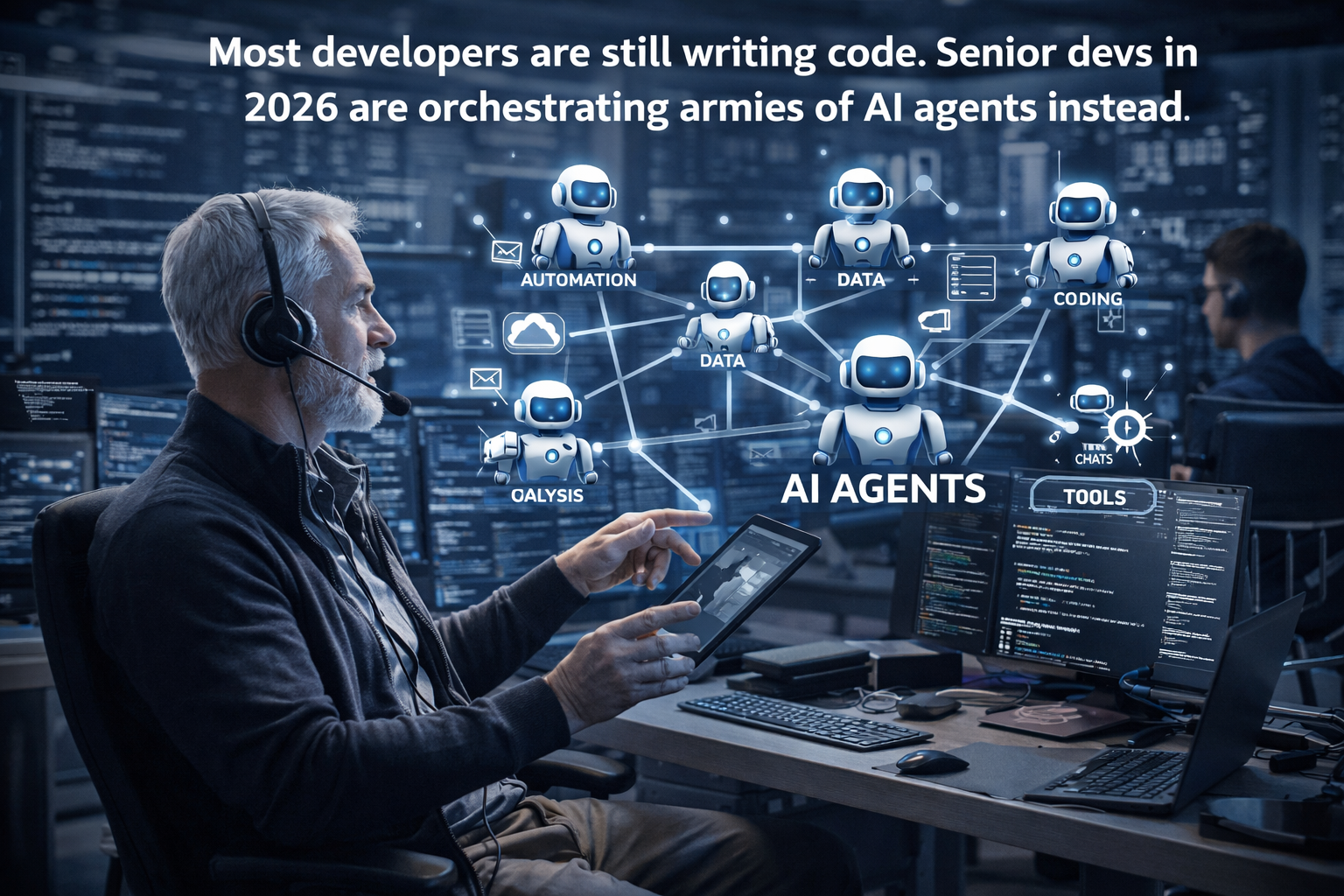
Most developers are still writing code. Senior devs in 2026 are orchestrating armies of AI agents instead. img
Most developers are still writing code. But in 2026, senior developers are orchestrating entire armies of AI agents—automating workflows, scaling systems, and redefining software development.
Structured like an editorial page, with a cleaner reading flow instead of repeated card blocks.
In 2026, the role of a developer is no longer just about writing code. The real shift is happening at the top level—senior developers are becoming AI orchestrators. Instead of manually building every function, they design intelligent systems where multiple AI agents collaborate to solve problems.
AI agent orchestration means creating a system of specialized agents. One agent plans, another executes, another gathers data, and another summarizes results. These agents communicate, share memory, and use tools like APIs, browsers, and databases. The developer’s job is not to code every step, but to design the system, define goals, and control workflows.
Traditional developers focus on syntax, logic, and implementation. In contrast, AI-first developers focus on system design, automation, and decision-making pipelines. They think in terms of workflows instead of functions.
A typical AI agent system includes an LLM (like GPT or Claude) as the brain, a memory layer using vector databases (like FAISS or Pinecone), a tool layer for real-world actions, and an orchestration framework like LangChain, CrewAI, or AutoGen. All of this runs inside scalable environments like Docker containers.
For example, instead of writing a data analysis script, a developer sets up:
- A Data Collection Agent
- A Processing Agent
- A Reporting Agent
These agents run autonomously, collaborate, and deliver results without constant human input.
Docker plays a key role in this ecosystem. Each agent can run in its own container, ensuring consistency, scalability, and easy deployment across environments. Combined with Kubernetes, entire fleets of AI agents can be managed efficiently.
The benefits are huge: faster development, automation of complex workflows, and the ability to scale systems rapidly. But there are challenges too—debugging multi-agent systems, managing API costs, latency, and ensuring security.
To stay relevant, developers must shift their skillset. Prompt engineering, system design, AI frameworks, and DevOps tools like Docker are becoming essential.
The future is clear: developers won’t just write code—they’ll design and control intelligent systems. Coding is becoming a smaller part of the job, while orchestration is becoming the core skill.
Article gallery
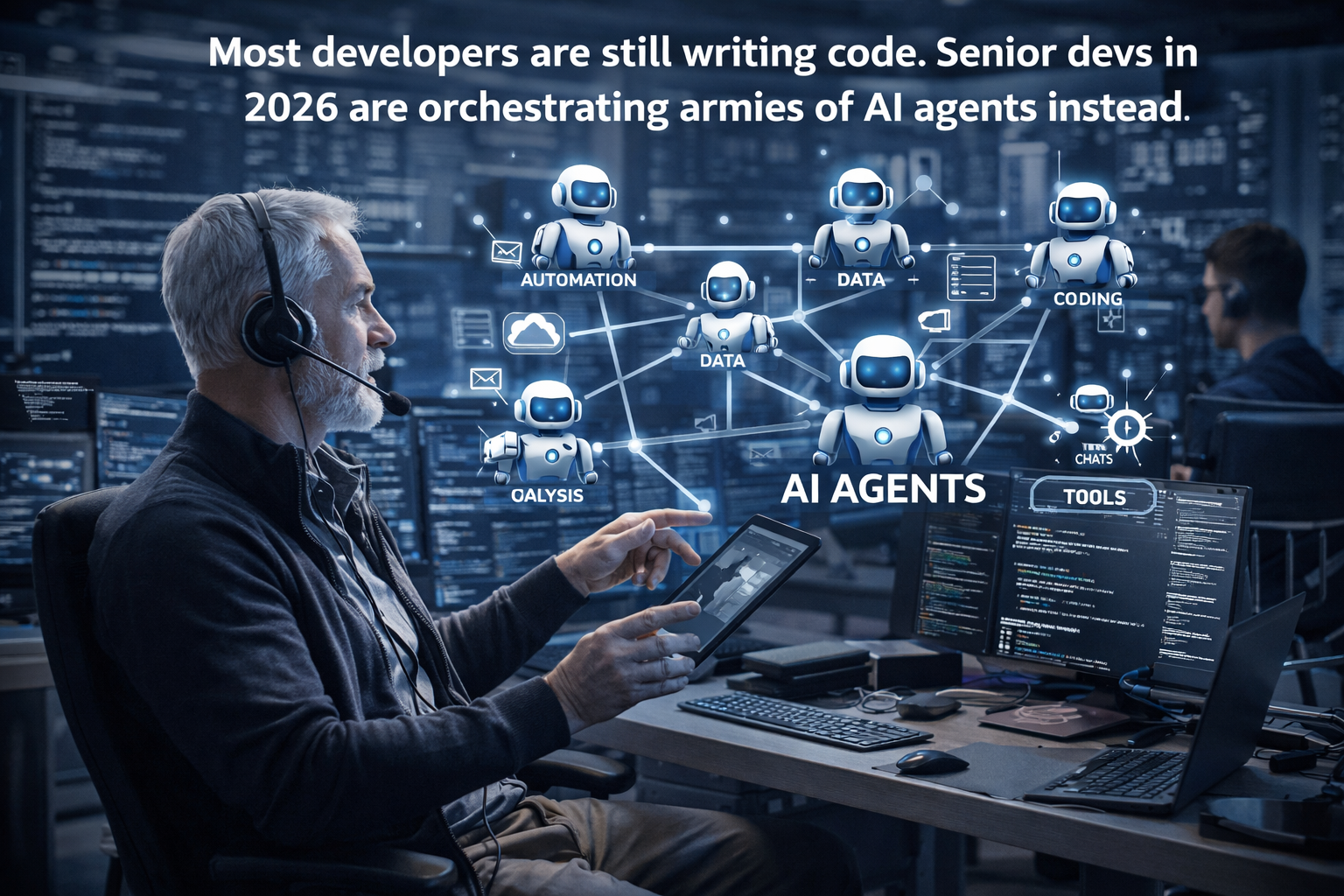
Most developers are still writing code. Senior devs in 2026 are orchestrating armies of AI agents instead. img visuals from the admin gallery
Need this done properly
Build, performance, SEO, and content can be handled in one delivery flow.
If you are planning a business site, technical blog, or product build that needs to look sharp and rank cleanly, the same approach can be applied to your stack.