


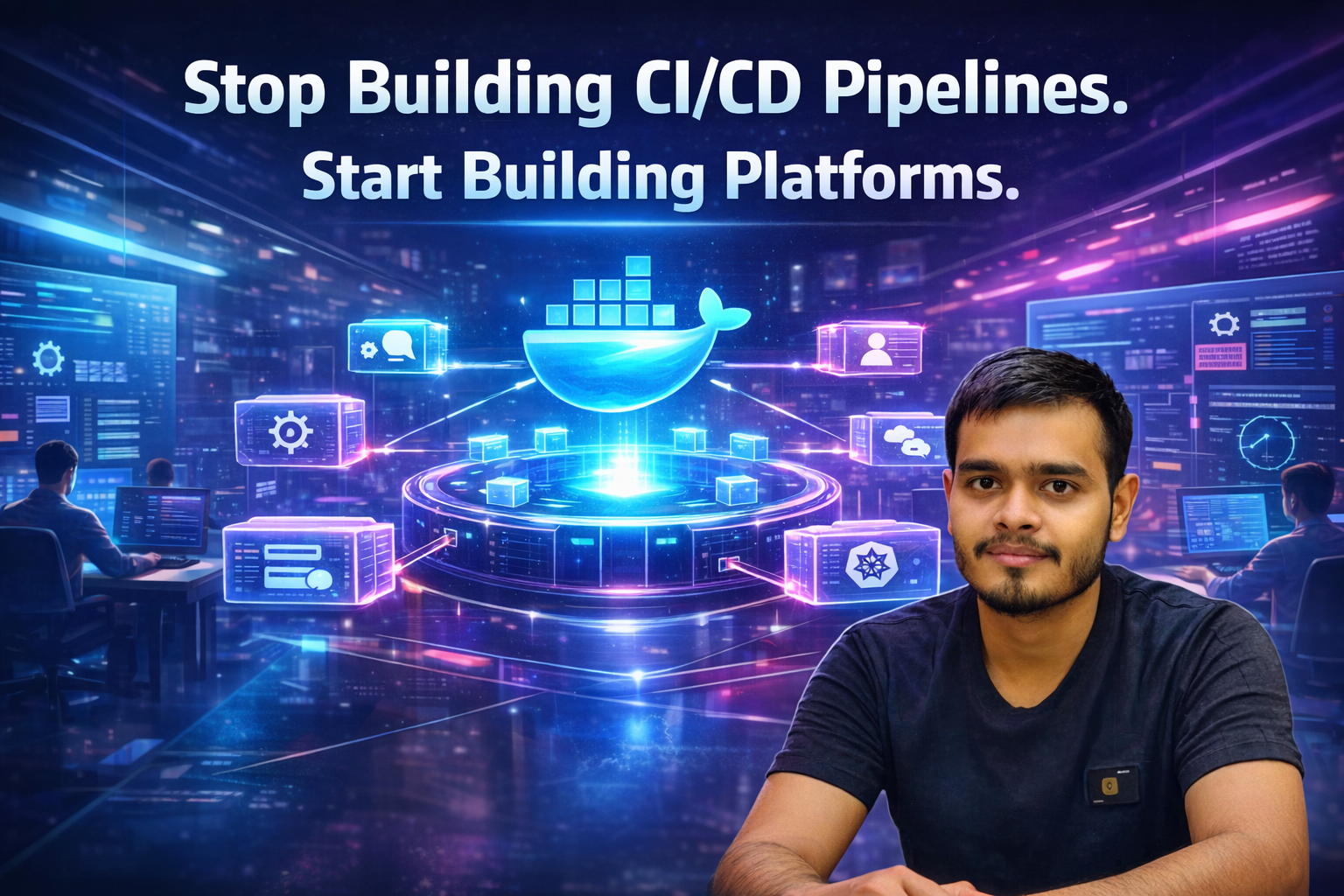
Stop Building CI/CD Pipelines. Start Building Platforms.
CI/CD pipelines solved deployment problems—but they’re no longer enough. Modern teams are moving towards platform engineering to create scalable, self-serve systems that empower developers and accelerate innovation.
Structured like an editorial page, with a cleaner reading flow instead of repeated card blocks.
For years, CI/CD pipelines have been the backbone of modern software delivery.
They helped teams automate builds, run tests, and deploy applications faster than ever before.
This shift was revolutionary for DevOps and software engineering.
But today, the landscape is changing.
As systems become more complex and teams scale, CI/CD pipelines alone are no longer enough.
They are starting to show limitations in flexibility, scalability, and developer experience.
👉 It’s time to rethink how we build and ship software.
👉 It’s time to move from pipelines to platforms.
Article gallery
Stop Building CI/CD Pipelines. Start Building Platforms. visuals from the admin gallery
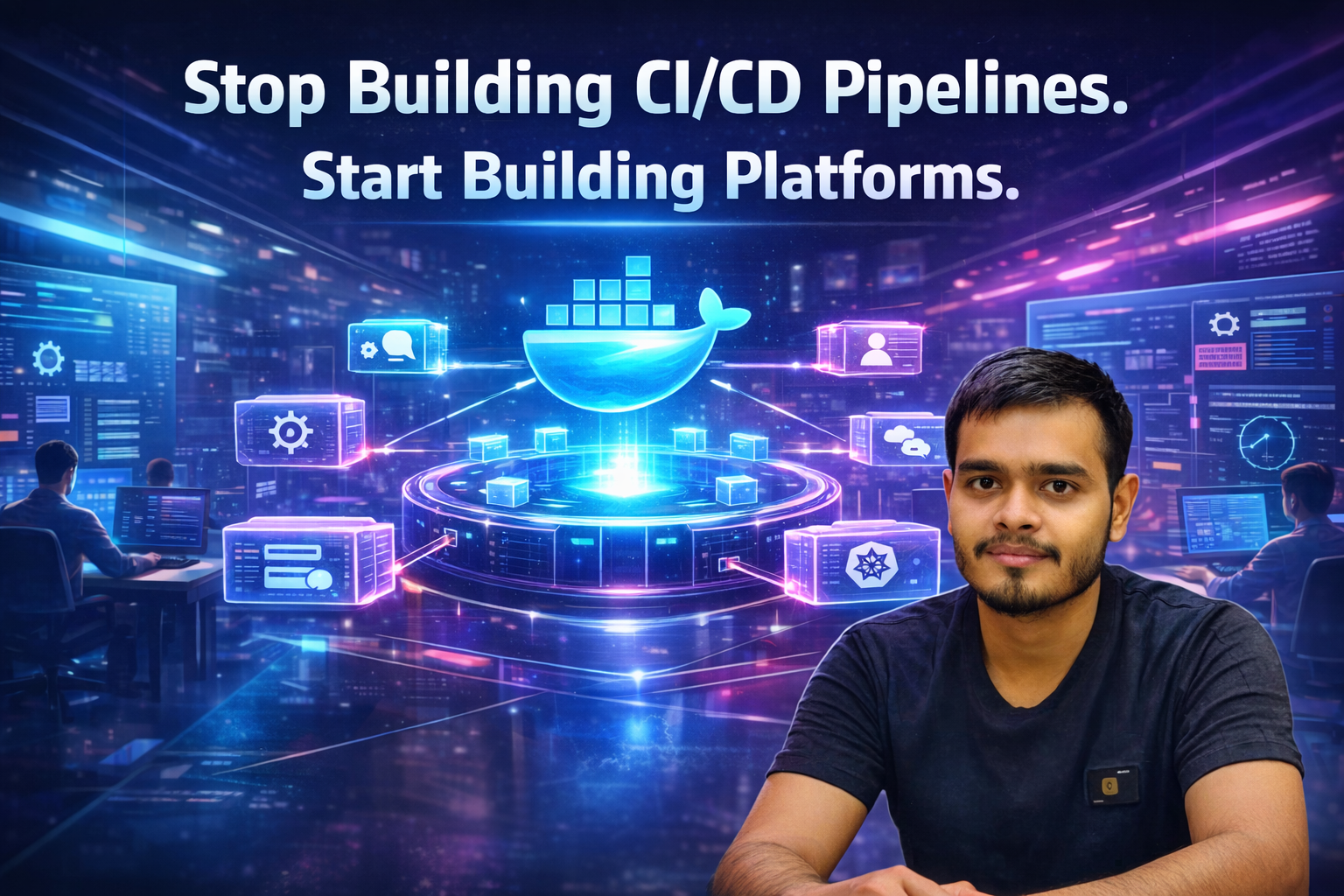
🚧 The Problem with CI/CD Pipelines
CI/CD pipelines were designed to solve a specific problem:
- Automate integration
- Automate testing
- Automate deployment
And they did that job well.
However, as organizations grow, pipelines become:
- Complex and hard to maintain
- Different across teams
- Difficult to standardize
- Time-consuming to debug
Each team starts building its own pipeline logic.
Different tools, scripts, and configurations create inconsistency.
👉 Instead of simplifying development, pipelines often add overhead.
🏗️ What Is Platform Engineering?
Platform engineering is the practice of building internal platforms that provide developers with everything they need in one place.
Instead of writing pipelines, developers use a central platform that handles:
- CI/CD
- Infrastructure
- Monitoring
- Security
- Deployment
👉 It’s like giving developers a ready-made system instead of asking them to build everything from scratch.
🔄 From Pipelines to Platforms
The traditional model looks like this:
Code → CI/CD Pipeline → Deployment
The modern model looks like this:
Developer → Platform → Everything (CI/CD + Infra + Tools)
👉 The platform becomes the foundation of development.
⚙️ Why This Shift Is Happening
1. Growing Complexity
Modern applications use:
- Microservices
- Containers
- Kubernetes
- Cloud infrastructure
Managing all of this through pipelines alone is not sustainable.
2. Developer Experience (DX)
Developers want:
- Faster onboarding
- Less configuration
- More focus on coding
Platforms remove friction by providing:
- Self-service tools
- Pre-configured environments
- Automated workflows
3. Lack of Standardization
Without a platform:
- Every team builds differently
- Every pipeline is unique
With a platform:
- Best practices are enforced
- Systems become consistent
4. Speed and Efficiency
Platforms help teams:
- Deploy faster
- Reduce errors
- Improve collaboration
👉 Productivity increases significantly.
🧩 What a Platform Provides
A strong internal platform includes:
- CI/CD automation
- Infrastructure provisioning
- Monitoring and logging
- Security controls
- Developer dashboards
👉 Everything developers need is centralized.
🧪 Real-World Example
Imagine a company with multiple engineering teams.
Without a platform:
- Each team builds its own CI/CD
- Different tools are used
- Debugging is difficult
- Scaling is slow
With a platform:
- One unified system
- Standard workflows
- Faster deployment
- Better collaboration
🧠 Impact on Developers
Before:
- Writing YAML files
- Managing pipelines
- Fixing deployment issues
Now:
- Focus on building features
- Use platform tools
- Spend more time coding
👉 Developers become more productive and efficient.
💼 Impact on Businesses
Businesses benefit in many ways:
- Faster product delivery
- Lower infrastructure costs
- Better scalability
- Improved team efficiency
👉 Platform engineering creates long-term value.
🔮 The Future of Software Development
The industry is moving towards:
- Internal developer platforms (IDPs)
- Platform teams
- GitOps workflows
- Cloud-native architectures
CI/CD will still exist, but it will become part of the platform—not the center of it.
🎯 Conclusion
CI/CD pipelines were a major breakthrough in software development.
But today, they are no longer enough.
👉 The future is about platforms, not pipelines.
Organizations that adopt platform engineering will:
- Build faster
- Scale better
- Empower developers
👉 Stop building pipelines.
👉 Start building platforms.
🔗 Tutorial Links
- https://platformengineering.org/
- https://backstage.io/docs/
- https://kubernetes.io/docs/home/
- https://argo-cd.readthedocs.io/en/stable/
📚 References
- https://platformengineering.org/blog
- https://martinfowler.com/articles/platform-engineering.html
- https://github.com/backstage/backstage
- https://aws.amazon.com/devops/
🚀 Call to Action
👉 Start building your internal platform today
👉 Improve developer experience and productivity
👉 Move beyond CI/CD and embrace the future
Need this done properly
Build, performance, SEO, and content can be handled in one delivery flow.
If you are planning a business site, technical blog, or product build that needs to look sharp and rank cleanly, the same approach can be applied to your stack.