


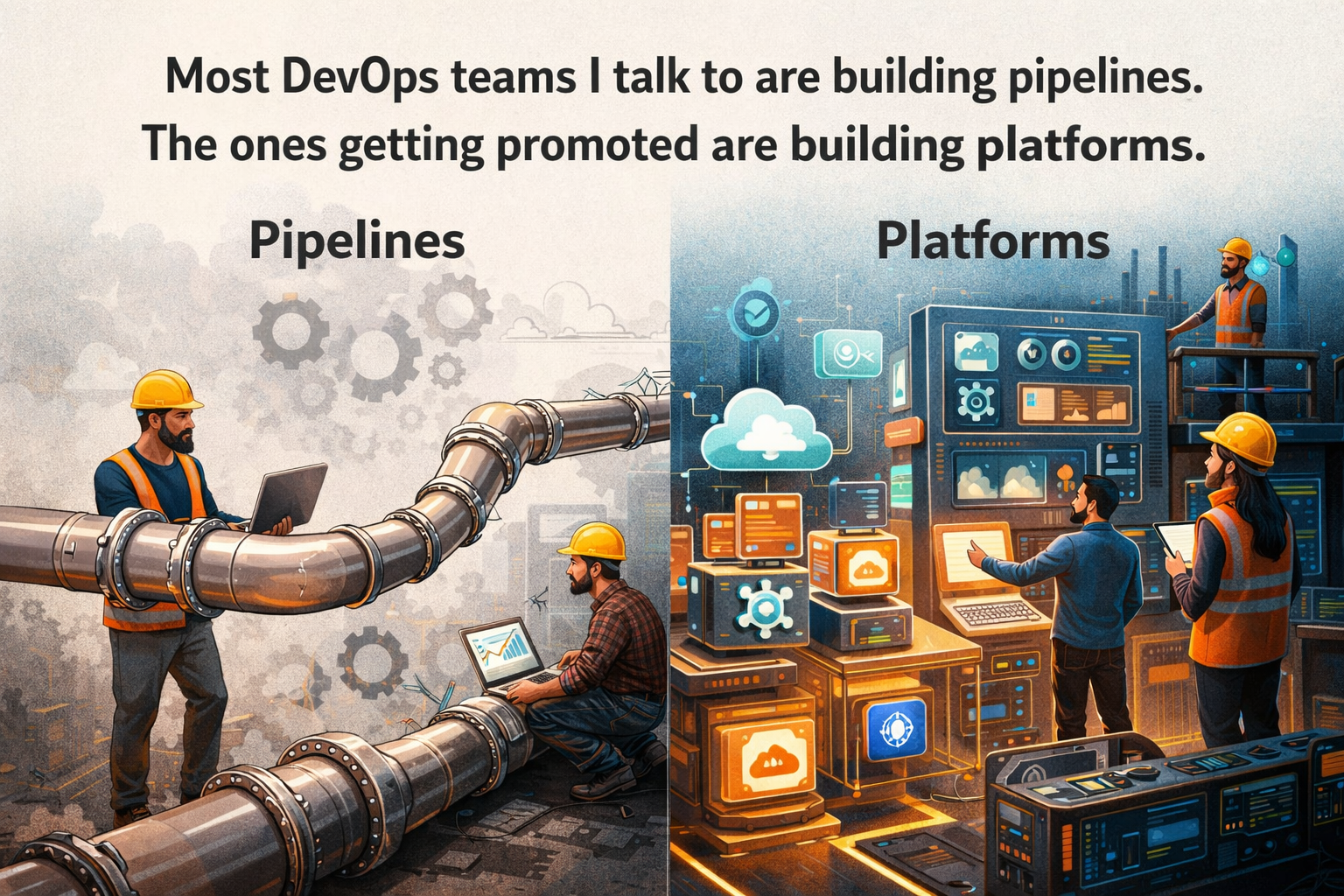
Most DevOps Teams Are Building Pipelines. The Ones Getting Promoted Are Building Platforms
DevOps world me sirf pipelines banana ab enough nahi hai. Real growth un engineers ko mil rahi hai jo reusable, scalable platforms build kar rahe hain. Yeh blog explain karta hai difference between pipelines vs platforms — aur kaise tum apni career trajectory upgrade kar sakte ho.
Structured like an editorial page, with a cleaner reading flow instead of repeated card blocks.
DevOps teams har company me pipelines bana rahi hain.
CI/CD pipelines. Deployment pipelines. Automation pipelines.
Aur phir bhi…
Promotion kisi aur ko milta hai.
Why?
Because pipelines execution solve karte hain. Platforms scale solve karte hain.
Article gallery
Most DevOps Teams Are Building Pipelines. The Ones Getting Promoted Are Building Platforms visuals from the admin gallery
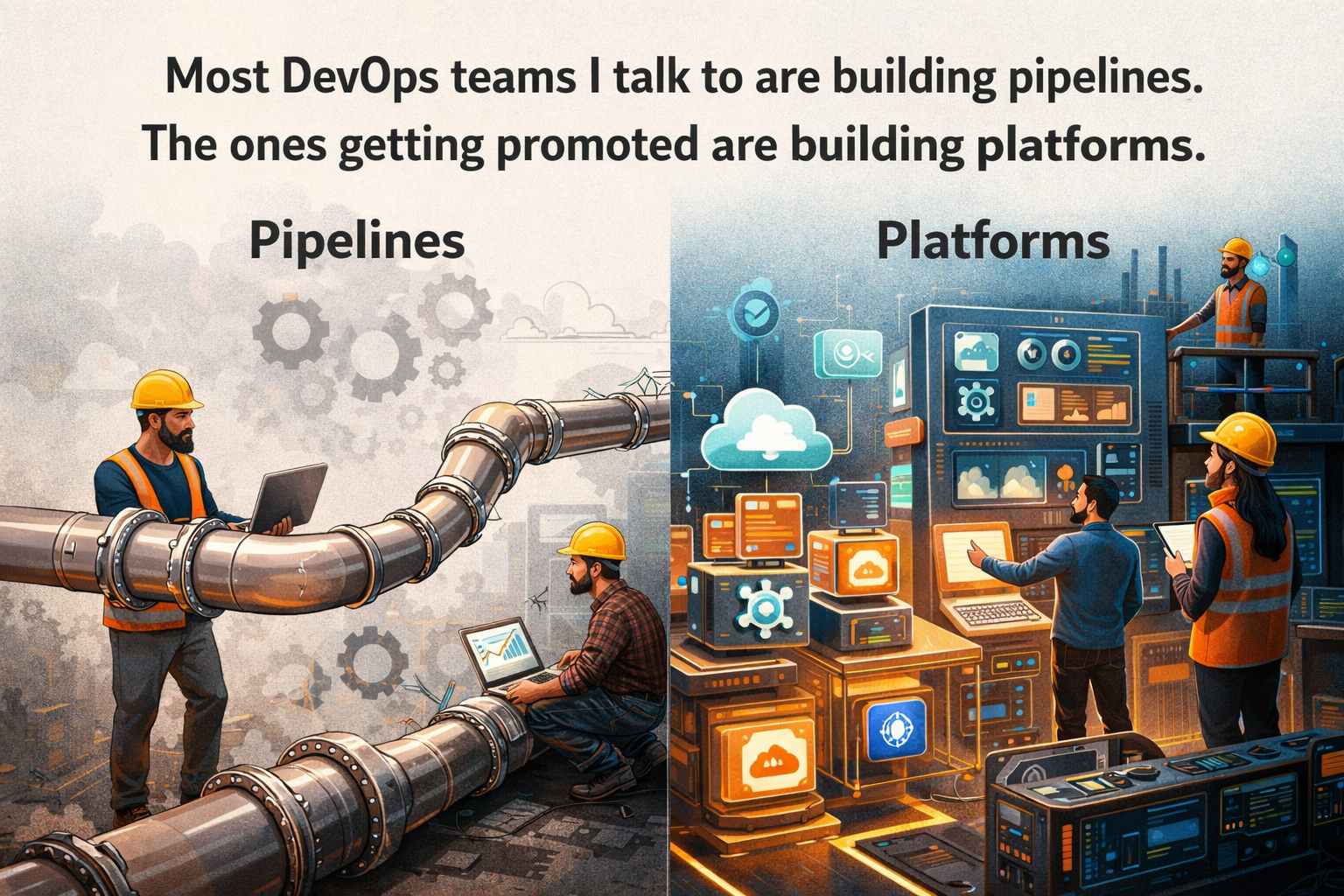
🚧 The Pipeline Mindset
Zyada tar DevOps engineers ka focus hota hai:
- Build automation
- CI/CD setup
- Deployment scripts
- Tool integrations
Yeh sab important hai.
But problem yeh hai:
Pipelines are often project-specific.
Har team apni pipeline banati hai. Har service ka alag setup hota hai.
Result?
- Duplication
- Maintenance overhead
- Inconsistency
🏗️ The Platform Mindset
Platform builders sochte hain:
“Main ek system kaise banaun jo sab teams use kar sake?”
Instead of building:
- 10 pipelines for 10 teams
They build:
- 1 platform used by 10 teams
🔄 Pipelines vs Platforms (Core Difference)
| Pipelines | Platforms |
|---|---|
| Task-specific | System-level |
| Repetitive | Reusable |
| Short-term value | Long-term impact |
| Team-focused | Org-wide impact |
| Manual customization | Self-service |
🚀 Why Platforms Get You Promoted
1. Scale of Impact
Pipeline → ek team ko help karta hai
Platform → poori organization ko help karta hai
2. Business Value
Platform:
- Faster onboarding
- Consistent deployments
- Reduced failures
Direct business impact.
3. Ownership & Vision
Platform builders:
- Systems design karte hain
- Standards define karte hain
- Engineering direction set karte hain
Yeh leadership traits hain.
4. Reduced Cognitive Load
Developers ke liye:
“Just deploy — platform handle karega.”
Yeh developer experience improve karta hai.
🧱 What Does a DevOps Platform Look Like?
Ek strong platform me hota hai:
- Self-service deployment system
- Standard CI/CD templates
- Centralized monitoring & logging
- Security built-in (DevSecOps)
- Infrastructure abstraction
🔥 Real Examples
- Internal Developer Platforms (IDP)
- Kubernetes-based platforms
- GitOps systems
- Platform engineering teams (Spotify model)
🧭 How to Shift from Pipelines to Platforms
1. Stop Thinking Per Project
Socho:
- “Reusable kya ban sakta hai?”
2. Standardize Everything
- Templates
- Workflows
- Infrastructure patterns
3. Build Self-Service Tools
Developers ko empower karo:
- Buttons instead of scripts
- UI instead of manual configs
4. Focus on Developer Experience (DX)
Agar developer struggle kar raha hai: → Platform fail hai
5. Think Like a Product Builder
Platform = product
- Users = developers
- Feedback = essential
- Iteration = continuous
⚠️ Common Mistakes
- Over-engineering platform
- Ignoring developer feedback
- Building without adoption plan
- Tool-focused instead of problem-focused
🧠 Final Thought
Har engineer pipeline bana sakta hai.
But…
Platform builder banne ke liye system thinking chahiye.
Aur wahi difference create karta hai between:
- Engineer vs Leader
- Contributor vs Architect
- Worker vs Promoted professional
Pipelines make you useful. Platforms make you valuable.
Need this done properly
Build, performance, SEO, and content can be handled in one delivery flow.
If you are planning a business site, technical blog, or product build that needs to look sharp and rank cleanly, the same approach can be applied to your stack.