


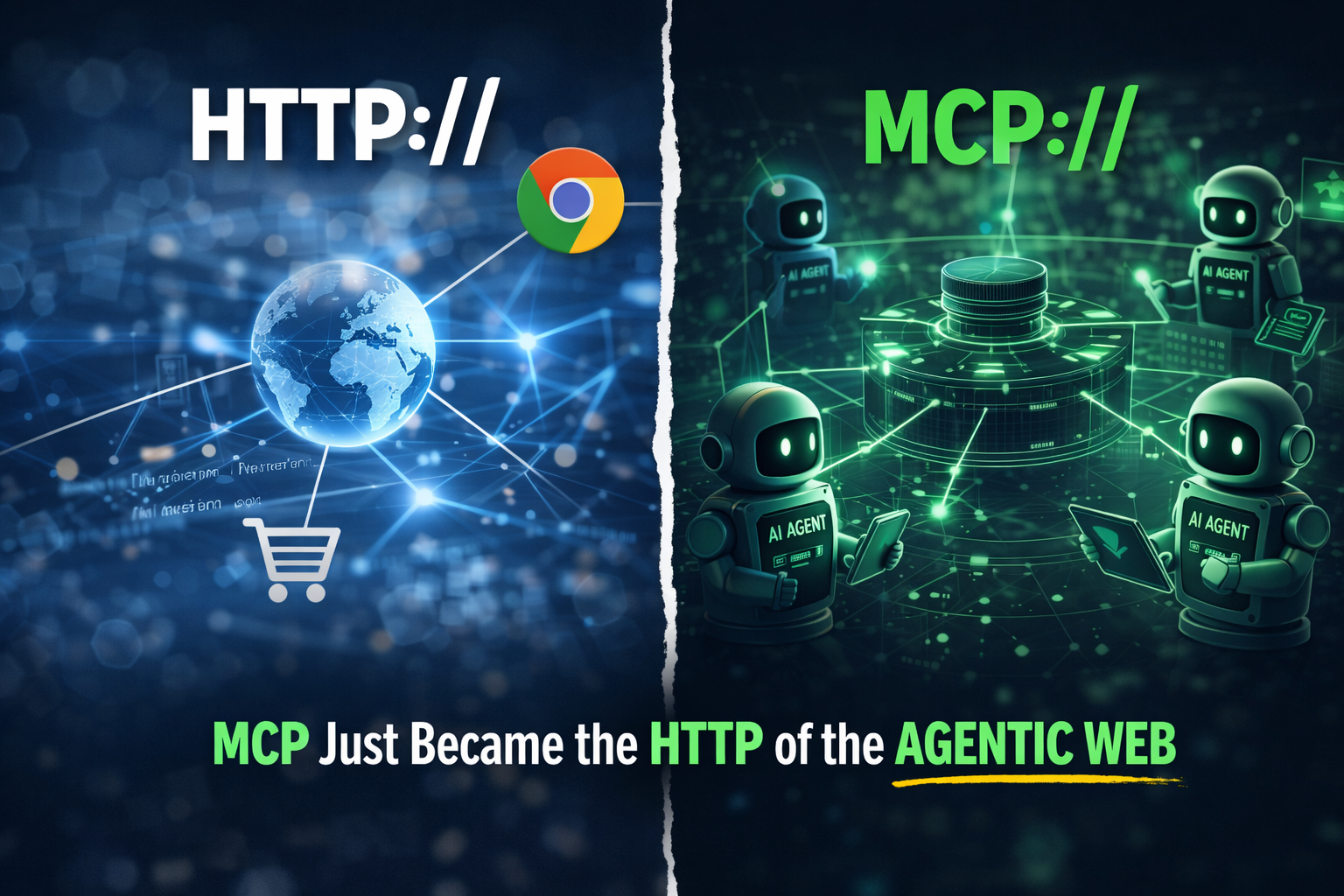
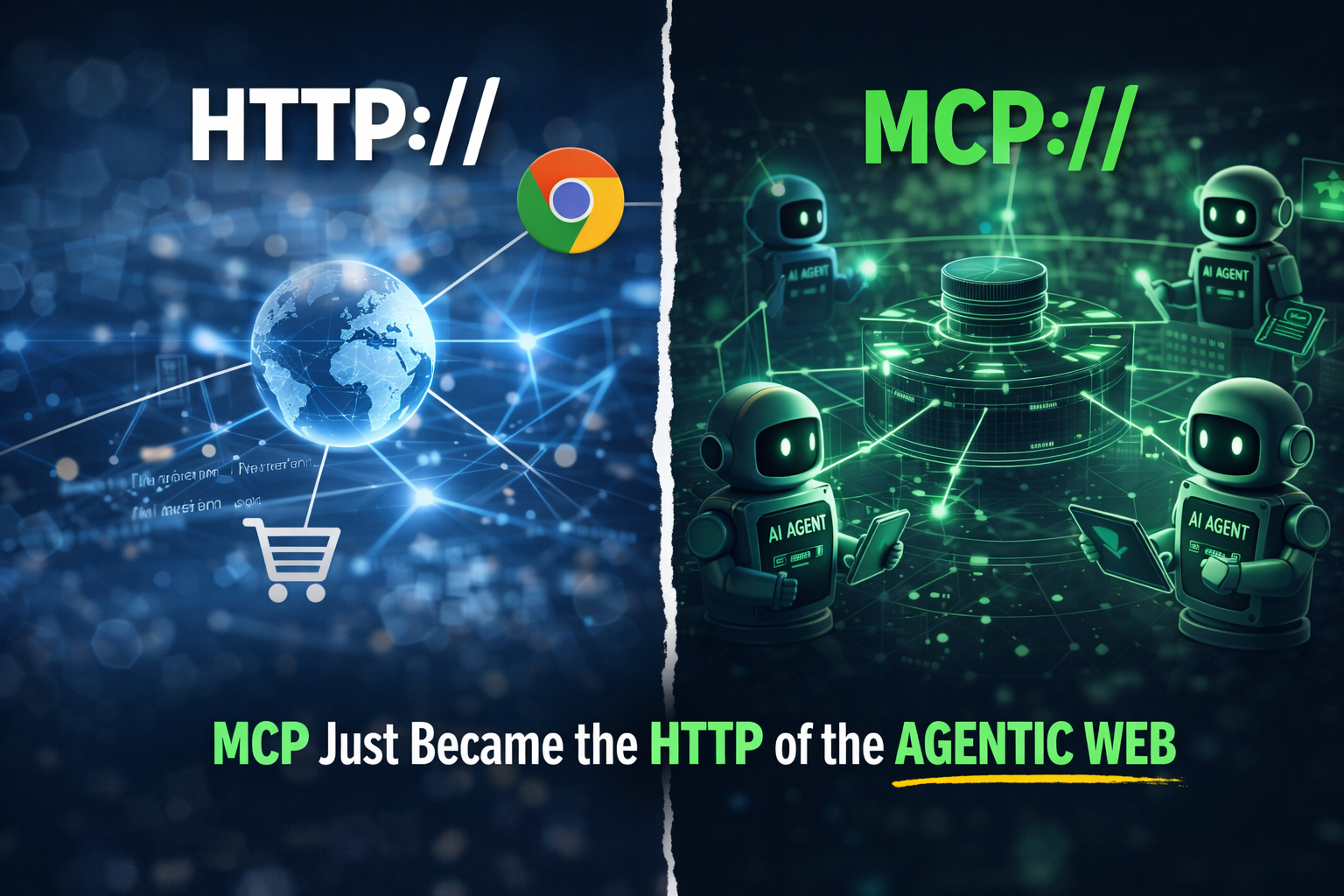
MCP Just Became the HTTP of the Agentic Web
A new standard is emerging for AI agents, and it might be as important as HTTP was for the internet. Here’s why MCP could define the future of the agentic web.
Structured like an editorial page, with a cleaner reading flow instead of repeated card blocks.
The internet scaled because of one simple idea: standardization.
HTTP made it possible for browsers and servers to communicate seamlessly.
Now, something similar is happening again.
And this time, it’s for AI agents.
Article gallery
MCP Just Became the HTTP of the Agentic Web visuals from the admin gallery
🌐 Enter MCP
MCP (Model Context Protocol) is quickly becoming the standard way AI agents interact with tools, data, and systems.
Think of it like this:
HTTP connected websites.
MCP connects AI agents.
⚡ Why This Matters
Right now, the agent ecosystem is fragmented.
- Every tool has its own integration
- Every system speaks a different language
- Developers are stuck building custom connectors
MCP changes that.
🔗 What MCP Enables
With MCP, AI agents can:
- Discover tools dynamically
- Access structured context
- Communicate across platforms
- Execute tasks in a standardized way
It removes the chaos.
🧠 The Bigger Shift
We’re moving from:
- Apps → Agents
- APIs → Intent-driven actions
- Manual workflows → Autonomous systems
And MCP is the layer making this possible.
🚀 Why This Feels Like Early HTTP
In the early days of the web:
- No standard → slow adoption
- HTTP → explosion of websites
Today:
- No agent standard → limited scale
- MCP → potential explosion of agents
🎯 What This Means for Builders
If you're building in AI:
- Start thinking in protocols, not just products
- Design for interoperability
- Build systems that agents can plug into
🔥 Final Thought
The winners in the next wave won’t just build tools.
They’ll build on top of standards.
And MCP might just be the one that defines it all.
👉 The agentic web is coming. Are you ready?
Need this done properly
Build, performance, SEO, and content can be handled in one delivery flow.
If you are planning a business site, technical blog, or product build that needs to look sharp and rank cleanly, the same approach can be applied to your stack.