


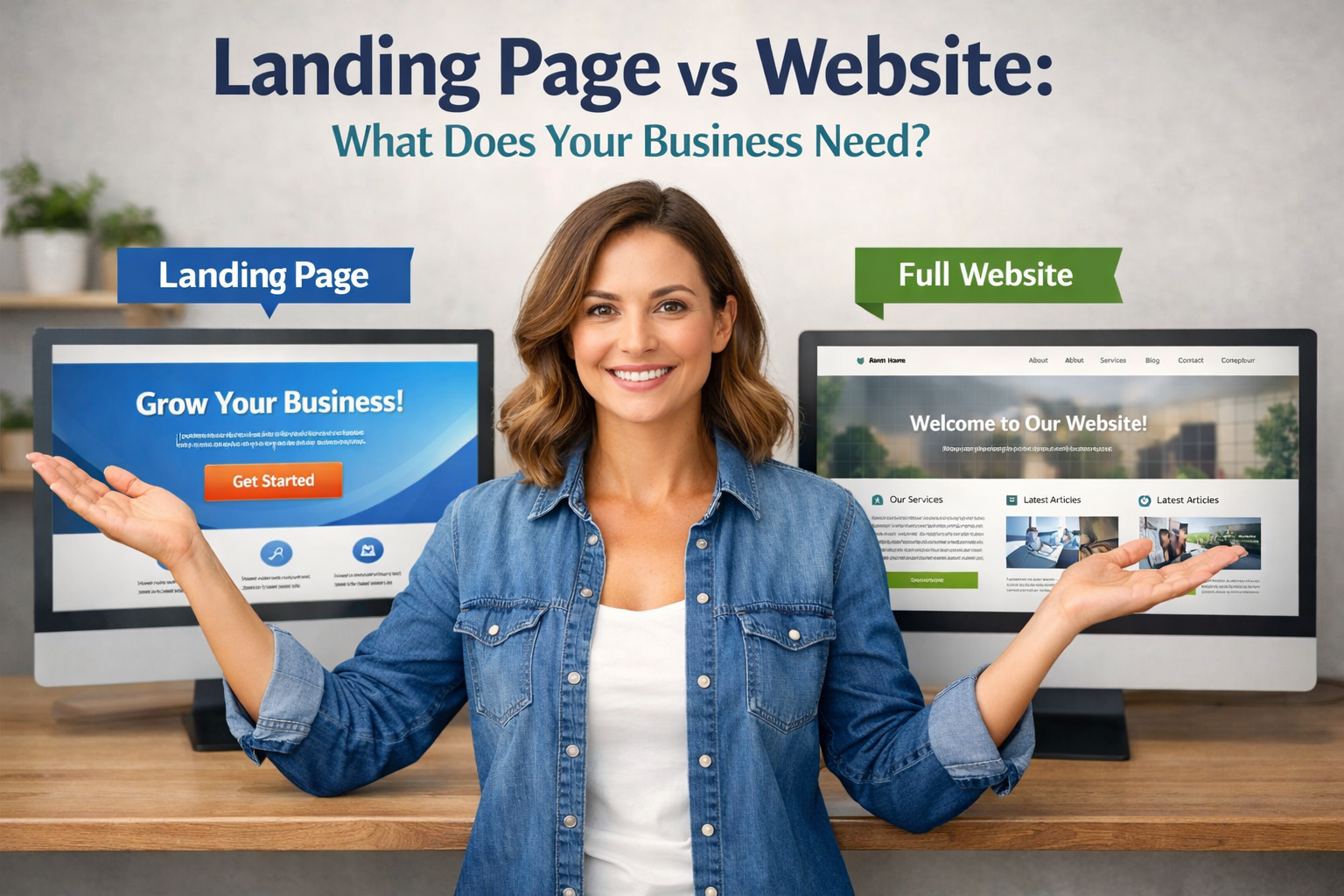
Landing Page vs Website: The Ultimate Guide to Choosing the Right One
Confused between a landing page and a full website? Learn the key differences, benefits, and when to choose each for your business growth.
Structured like an editorial page, with a cleaner reading flow instead of repeated card blocks.
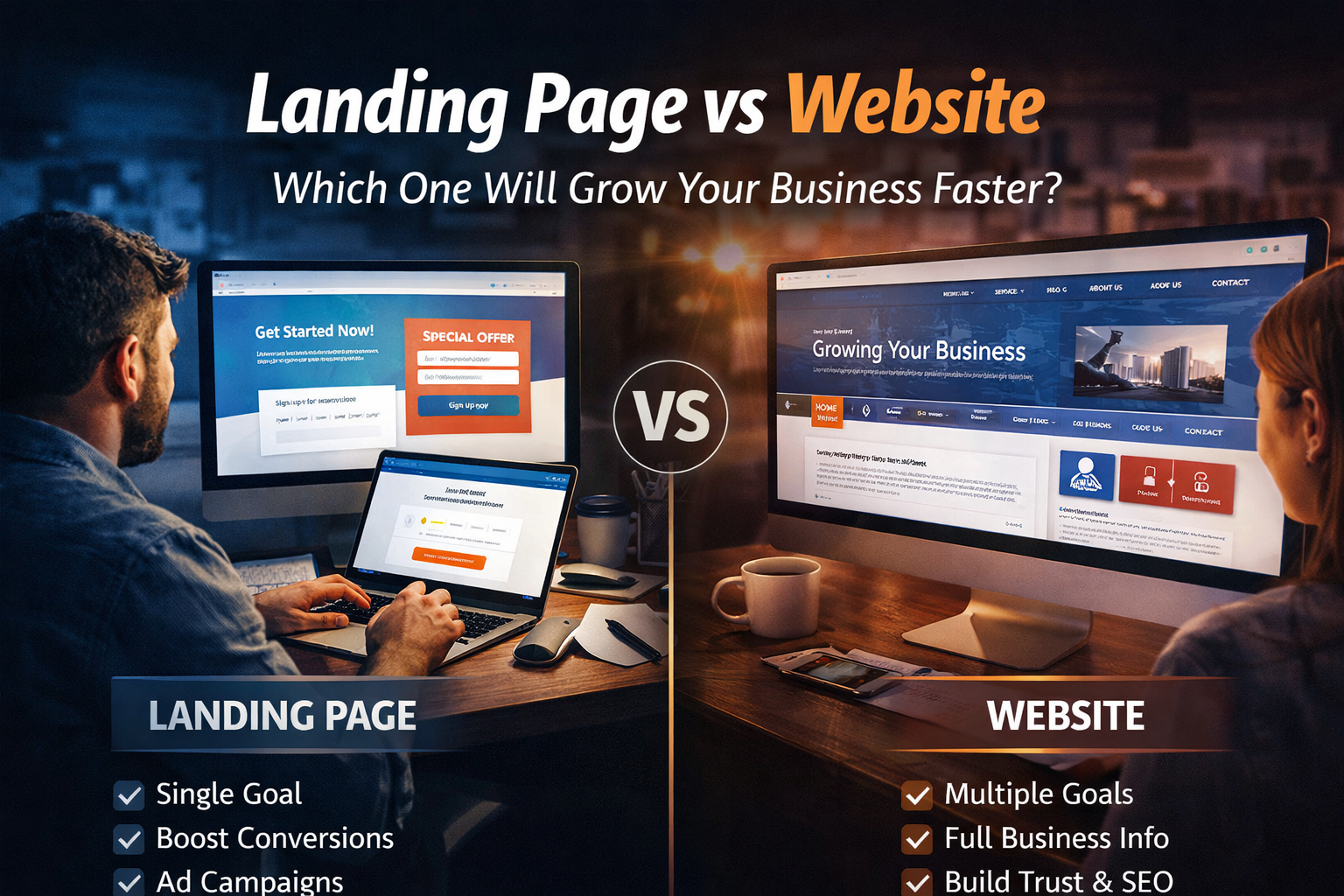
Landing Page vs Website: Which One Will Grow Your Business Faster?
When building an online presence, one of the biggest decisions every business faces is whether to create a landing page or a full website. At first glance, both may look similar, but in reality, they serve completely different purposes and choosing the wrong one can slow down your growth, reduce conversions, and waste your marketing budget. Understanding the difference between a landing page and a website is not just a technical decision — it is a strategic business choice that directly impacts how your audience interacts with your brand.
A landing page is designed with a single, focused objective. It is built to drive a specific action, such as generating leads, collecting emails, selling a product, or getting users to sign up. Everything on a landing page is optimized for conversion — from the headline and visuals to the call-to-action button. There are no distractions, no unnecessary links, and no complex navigation. The entire page is structured to guide the user toward one clear goal. This makes landing pages extremely powerful for marketing campaigns, paid ads, product launches, and SaaS onboarding.
In contrast, a website is a complete digital ecosystem for your business. It consists of multiple pages such as Home, About, Services, Blog, and Contact, each serving a different purpose. A website is not just about conversion — it is about building trust, showcasing your brand, and providing detailed information to your audience. It allows users to explore your business, understand your offerings, and engage with your content over time. Websites are essential for long-term growth, SEO, and brand credibility.
The biggest difference between a landing page and a website lies in intent. A landing page is built for action, while a website is built for exploration. If your goal is to get quick results — like running Facebook ads, Google ads, or launching a new product — a landing page is the best choice because it minimizes friction and maximizes conversions. On the other hand, if your goal is to establish a strong online presence, rank on Google, and provide comprehensive information about your business, a website becomes necessary.
Performance is another key factor. Landing pages are usually faster because they are lightweight and focused. They are designed using proven conversion principles such as strong headlines, social proof, urgency, and clear CTAs. Websites, however, are larger and more complex, which can sometimes impact speed and user focus. While websites offer more information, they also introduce more distractions, which can reduce conversion rates if not designed properly.
SEO plays a major role in this decision. Websites are naturally better for SEO because they contain multiple pages, blog content, and internal linking structures that help search engines understand your business. Landing pages can also be optimized for SEO, but they are generally more effective when used with paid traffic rather than organic growth strategies. Businesses that rely heavily on content marketing, blogging, and long-term visibility should prioritize building a strong website.
From a business perspective, the smartest approach is not choosing one over the other, but using both strategically. A website acts as your brand’s foundation, while landing pages act as high-converting tools for specific campaigns. For example, you can run ads that direct users to a landing page for conversions, while your website builds trust and supports your overall brand image. This combination allows businesses to maximize both short-term results and long-term growth.
Cost and development time also differ significantly. Landing pages are quicker and more affordable to build because they require fewer features and less content. They are ideal for startups or businesses that want to validate an idea quickly. Websites require more time, planning, and investment, but they provide long-term value and scalability. If you are just starting out, launching with a landing page first and then expanding into a full website is often the best strategy.
However, many businesses make the mistake of using a website when they actually need a landing page, especially for marketing campaigns. Sending paid traffic to a general website can reduce conversion rates because users get distracted or fail to find the exact information they need. Similarly, relying only on landing pages without building a proper website can hurt brand credibility and SEO in the long run.
The key takeaway is simple: if your goal is conversion, speed, and focused marketing, go with a landing page. If your goal is brand building, trust, and long-term growth, invest in a website. But if you truly want to scale your business effectively, use both together in a smart and strategic way.
In today’s competitive digital world, businesses that understand this balance grow faster, convert better, and build stronger brands. Whether you are launching a startup, running ads, or scaling your services, choosing the right structure can make all the difference.
🚀 If you want to build high-converting landing pages or powerful websites, start with the right strategy and hire expert developers to bring your vision to life.
Article gallery
Landing Page vs Website: The Ultimate Guide to Choosing the Right One visuals from the admin gallery
Need this done properly
Build, performance, SEO, and content can be handled in one delivery flow.
If you are planning a business site, technical blog, or product build that needs to look sharp and rank cleanly, the same approach can be applied to your stack.