


Freelance Developer vs Agency: Which to Hire
Freelance developer or agency? Compare costs, speed, quality, and risk so you can make the right hiring decision for your project.
Structured like an editorial page, with a cleaner reading flow instead of repeated card blocks.
When building a website, app, or digital product, one of the most important decisions a business must make is whether to hire a freelance developer or a development agency. This decision directly impacts your budget, timeline, product quality, and long-term scalability. For startups and growing businesses, choosing the right option can make the difference between success and failure.
A freelance developer is an individual professional who works independently and typically handles specific tasks such as frontend development, backend development, or full stack implementation. Freelancers are usually hired for their expertise in a particular technology or for short-term projects. On the other hand, an agency is a team of professionals that includes designers, developers, project managers, and sometimes marketing experts. Agencies provide end-to-end solutions, from planning and design to development, testing, and deployment.
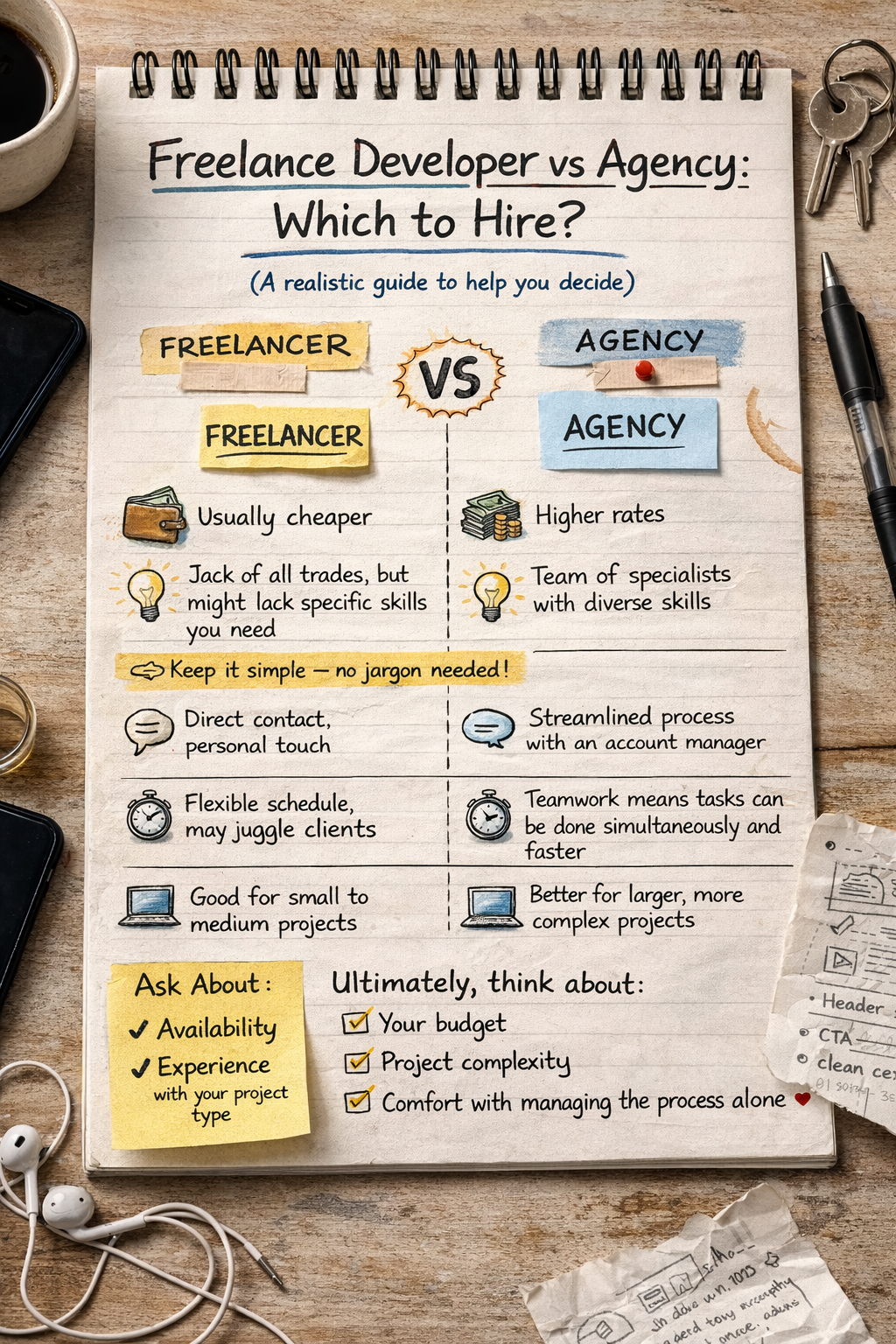
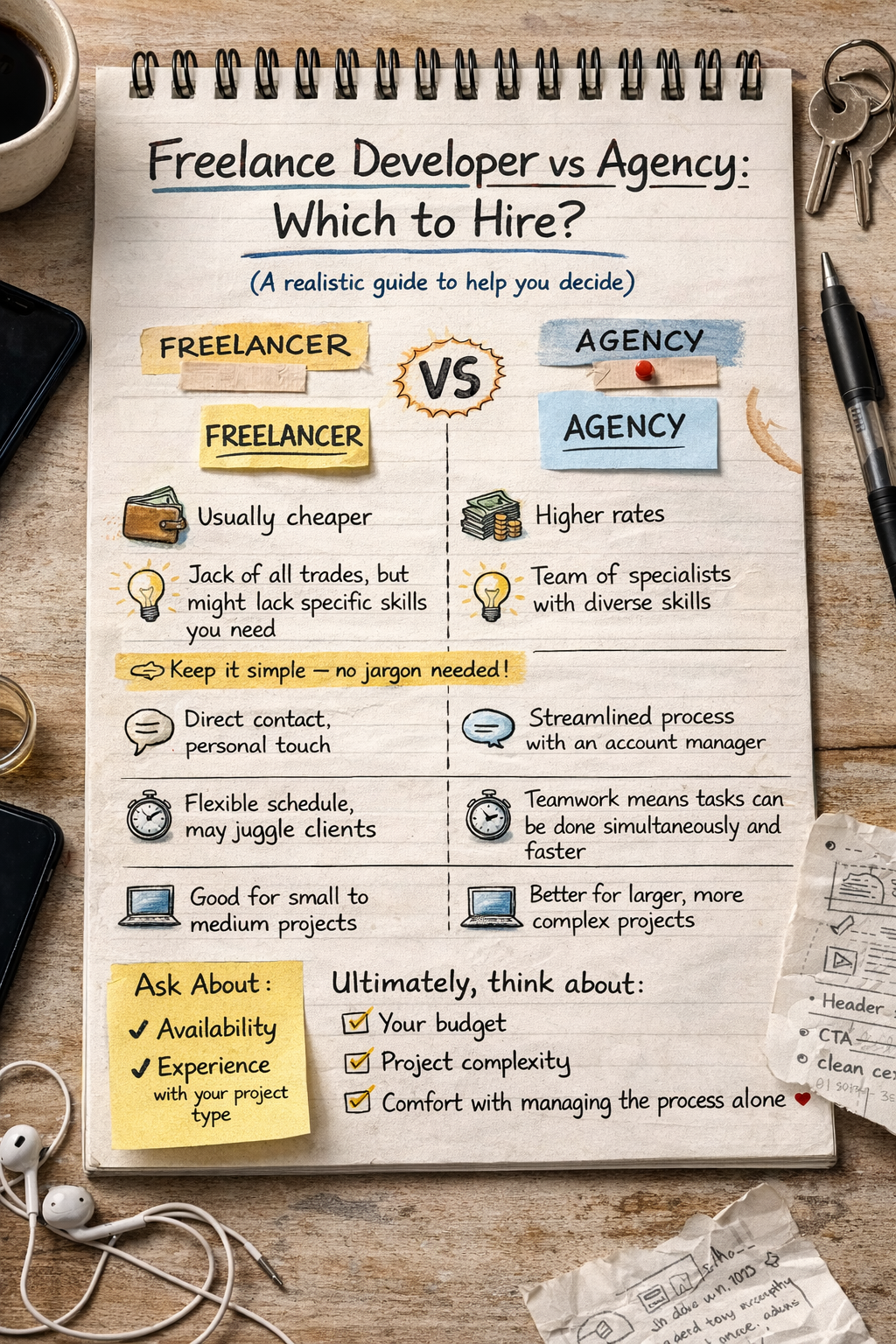
One of the biggest differences between freelancers and agencies is cost. Freelancers are generally more affordable because they have lower operational expenses. They are a great option for startups with limited budgets or small projects that do not require a large team. Agencies, however, are more expensive because they offer a complete package of services. While the upfront cost may be higher, agencies often provide better structure, support, and long-term reliability.
Another important factor is project complexity. If your project is simple, such as a landing page, basic website, or minor feature update, a freelancer can handle it efficiently. However, if your project is complex, such as an e-commerce platform, SaaS product, or multi-user system, an agency may be a better choice. Agencies have specialized team members who can handle different aspects of development simultaneously, which improves quality and speed.
Communication and project management also differ significantly between the two options. When working with a freelancer, you communicate directly with the person doing the work. This can be faster and more flexible, but it also depends heavily on the freelancer’s availability and discipline. In contrast, agencies usually have structured communication processes, regular updates, and dedicated project managers. This ensures better coordination but may involve more formal processes.
Time and scalability are also key considerations. Freelancers can work quickly on small tasks, but they may struggle with large-scale projects due to limited bandwidth. If your project grows or requires additional features, you may need to hire more freelancers, which can become difficult to manage. Agencies, on the other hand, can scale resources based on project needs. They can assign more developers, designers, or testers to speed up development and handle increasing complexity.
Quality and consistency are another area where agencies often have an advantage. Agencies follow standard processes, coding guidelines, and testing procedures to ensure consistent quality. Freelancers, while highly skilled, may have their own working style, which can vary from one individual to another. This does not mean freelancers deliver poor quality, but consistency can depend on the individual.
Risk management is also an important factor. When working with a freelancer, there is a higher risk of delays if the person becomes unavailable or takes on multiple projects. Agencies reduce this risk by having backup resources and team support. If one team member is unavailable, another can step in to continue the work.
Long-term support and maintenance should also be considered. Freelancers may or may not be available after project completion, depending on their schedule. Agencies usually offer maintenance packages, ongoing support, and updates, which are beneficial for businesses planning long-term growth.
However, agencies are not always the best choice. For startups in the early stage, hiring a freelancer or a full stack developer can be more practical. It allows you to build a minimum viable product (MVP) quickly and at a lower cost. Once the product is validated and starts growing, you can then consider moving to an agency for scaling and advanced features.
To decide which option is right for you, consider your project size, budget, timeline, and long-term goals. If you need a quick, cost-effective solution for a small project, a freelancer is a great choice. If you need a complete, scalable, and professionally managed solution, an agency is the better option.
In conclusion, both freelancers and agencies have their own strengths and limitations. There is no one-size-fits-all answer. The right choice depends on your specific business needs. The key is to clearly define your requirements, evaluate your priorities, and choose the option that aligns best with your goals. Whether you hire a freelancer or an agency, the ultimate objective should be to build a high-quality product that delivers value to your users and supports your business growth.
Article gallery
Freelance Developer vs Agency: Which to Hire visuals from the admin gallery
Need this done properly
Build, performance, SEO, and content can be handled in one delivery flow.
If you are planning a business site, technical blog, or product build that needs to look sharp and rank cleanly, the same approach can be applied to your stack.